Hair Art


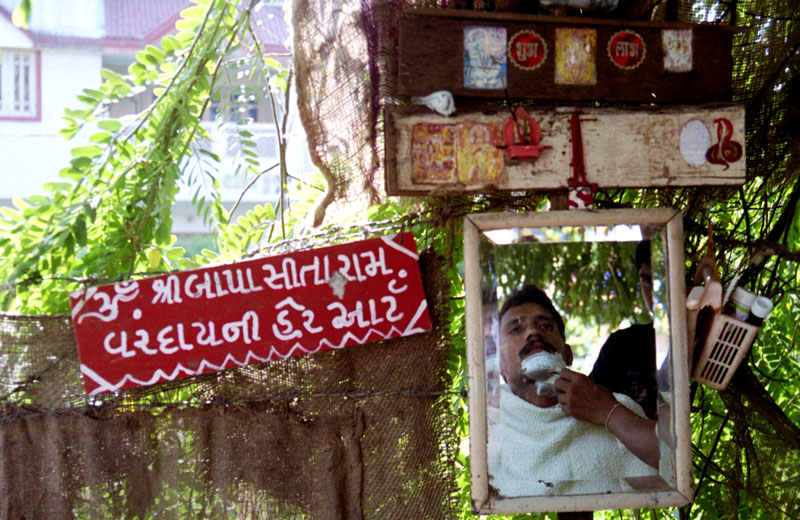
A mirror. The usual paraphernalia- shaving kit, scissors and combs. The ubiquitous good luck charms. A quiet corner on a busy thoroughfare. And a bright red board announcing an artist at work. After all what does an artist really need but a discerning patron?!

______

Nikon F75, 28-105mm
Fuji 400ISO
2005, Ahmedabad, India
Read more »

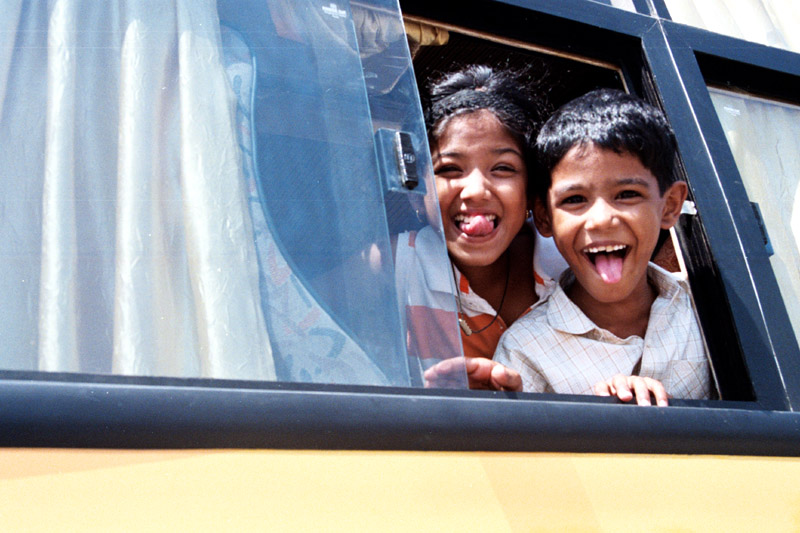
Kids will be kids...


______

Nikon F75, 28-105mm
Fuji 400 ISO
2005, Bombay-Pune Expressway, India
Read more »

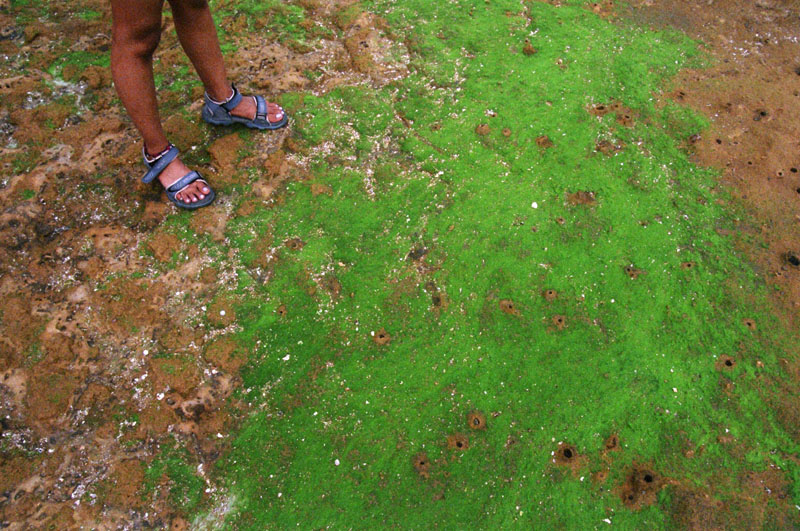
Green, on the beach!


______

Nikon F75, 28-105mm
Fuji 400ISO
2005, Diu, India
Read more »

(S)nail Paint !


Nikon F75, 28-105mm
Fuji 800ISO
2005, Diu, India.
Read more »

Dancing in the streets


Due apologies for being out of the circuit for so long. Work's a bitch, what can I say...

_____

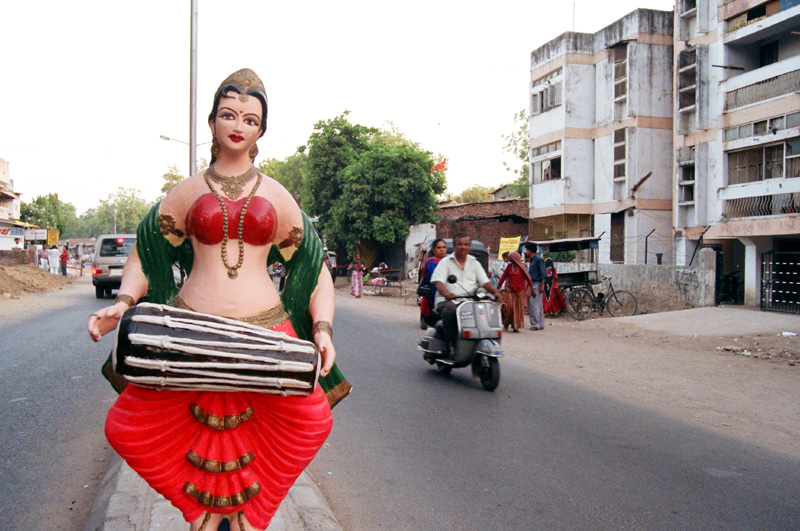
Right there in the middle of a fairly, if not altogether very, busy thoroughfare and staring me straight in the face so I couldn't ignore it if I tried stood this tacky Plaster of Paris drummer woman thingie in bright red and green. Right there on the little divider that separates the UP lane from the DOWN lane...

Apparently it belongs to no one in the neighbourhood. No one remembers who put it there. It just happened to be there one morning, or so I've been told, and remained there ever since.

Dance anyone...?

______

Nikon F75, 28-105mm
Fuji 400ISO
2005, Ahmedabad, India
Read more »

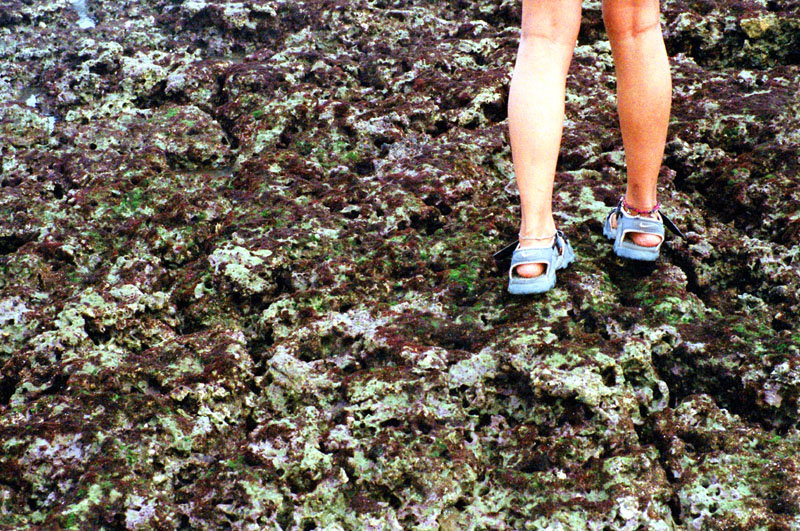
Walking on...


Nikon F75, 28-105mm
Fuji 800ISO
2005, Nagoa Beach, Diu, India.
Read more »

Of threads and bonds...


[Edit] Entry for Photo Friday: BLUR [/Edit]

______

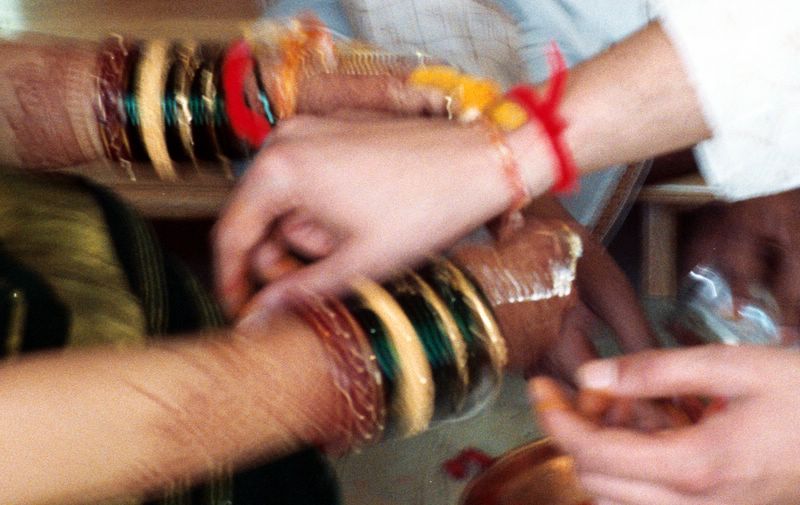
Saturday, last, was Raksha Bandhan. Hindu women tie a sacred thread (rakhi) on their brothers' wrist on this day. Symbolic of the bond tieing them together. The brother, in turn, vows to stand by her and protect her for life. There's an old story of how a Rajput queen in Rajasthan sent a rakhi to the Mughal ruler in Delhi, when her state was attacked by a neighbouring kingdom, beseeching him to come to her aid. The sultan, respecting the symbolism of the rakhi, promptly sent a huge army to ward off the invaders. From what I remember, the story had a happy ending. Anyway, it made for good story-telling when we were little.

Raksha Bandhan, this year, brought back memories of my little brother's wedding a couple of months back. A bond sealed, albeit of an altogether different sort. They tied sacred threads on each other's wrists, a miniscule part of an elaborate wedding ritual that made them one, and promised to stay with each other through thick and thin. This one's for them...

______

Nikon F75, 28-105mm
Fuji 800ISO
2005, My brother's wedding, Pune, India.
Read more »

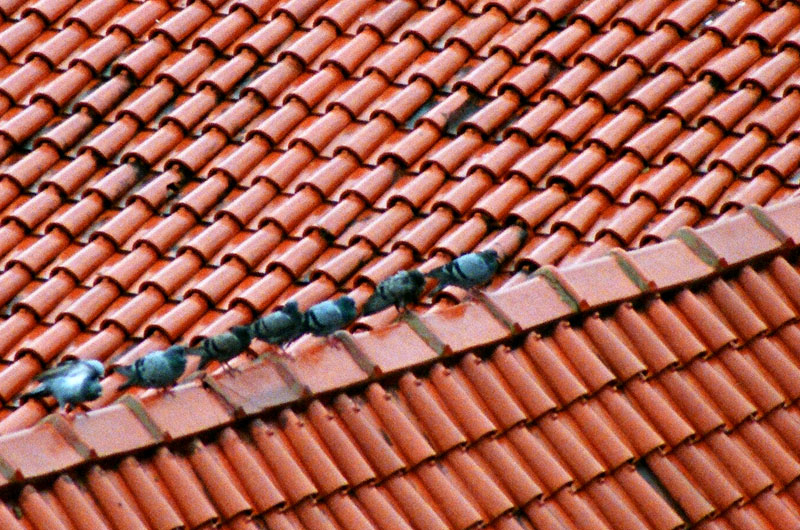
Mangalore tiles, and wet pigeons


And this one comes with no accompanying text. At least for now. Because I'm down with a really nasty case of flu and I can't get my brain to jump-start this morning.

______

Nikon F75, 70-300mm
Fuji 800ISO
2005, The little bungalow behind my office, Ahmedabad, India.
Read more »

Faerie Lights


You don't have to search very far or look very long to find beauty in this world.
No..?

Faerie lights always take me back to Diwali and Christmas, when we were children. The entire family would get together once a year and it used to be bonus time for us kids. We were a wild bunch and got into all kinds of mischief, my brother most of all, but Diwali and Christmas are times of good cheer and our parents, more often than not, chose to be leniant and let us have the run of the place. As Alexandra says, and I agree, faerie lights are about warmth and family. Even if they're strewn carelessly on the bed with the express purpose of photographing them, as these obviously are...

______

Nikon F75, 70-300mm, 1:2 Macro at 300mm
Fuji 800ISO
2005, In my bedroom, Ahmedabad, India.
Read more »

Red Spider Lilies


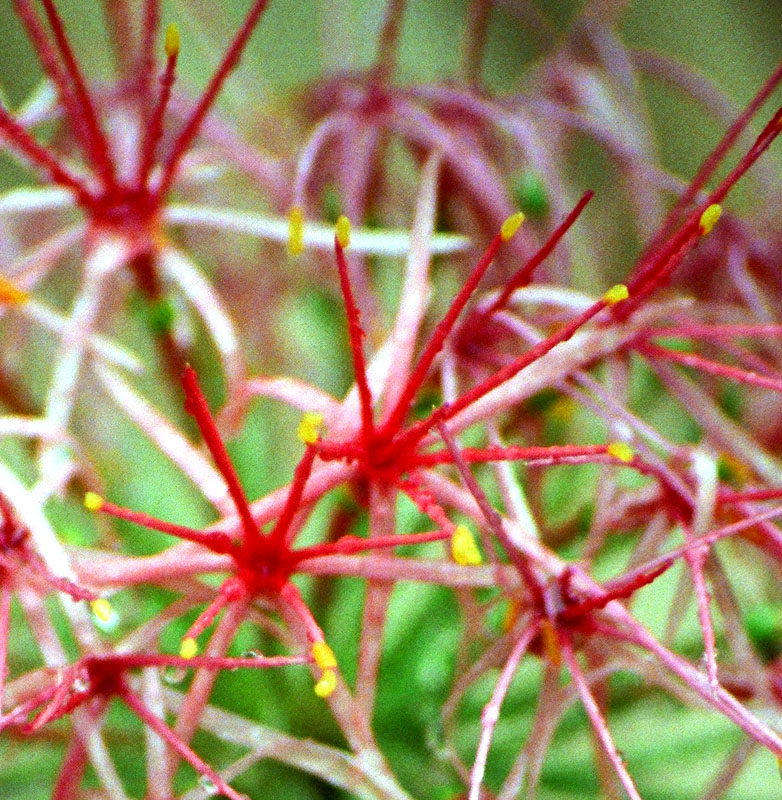
Once-a-year bloomers, these. A couple of weeks back the one in my garden suddenly decided to show up. Pity it was in the middle of the monsoons and the sky was overcast for the entire week that it was in bloom.

I spent two years of my life in the north-east corner of the country, back when I was around 10 years old. The north-east was virgin territory then, almost unheard of by tourist-folk, and therefore wild and beautiful. And prime orchid country! My mother took a fascination to cultivating orchids at home and over time I was taken in by the wildly eccentric plants that orchids can be. When my mother shifted back to warmer climes she got along with her a whole truckload of cultivated orchids which she tended with much care. But Ahmedabad's not a very kind place for most people, let alone orchids.

While not an orchid, this spider lily has that 'quality' that I find so endearing. A certain eccentricity, if you will...

______

Nikon F75, 70-300mm, 1:2 Macro at 300mm
Fuji 800ISO
2005, In my garden, Ahmedabad, India.
Read more »

Tuk-Tuks


I've been busy at work these last couple of weeks so I haven't been able to spend as much time here as I would've liked to. But I've been scanning old films, some new ones, processing some pictures and I think I've put together enough material to last me another week or so. So tonight I'll post something that's very close to my heart.

______

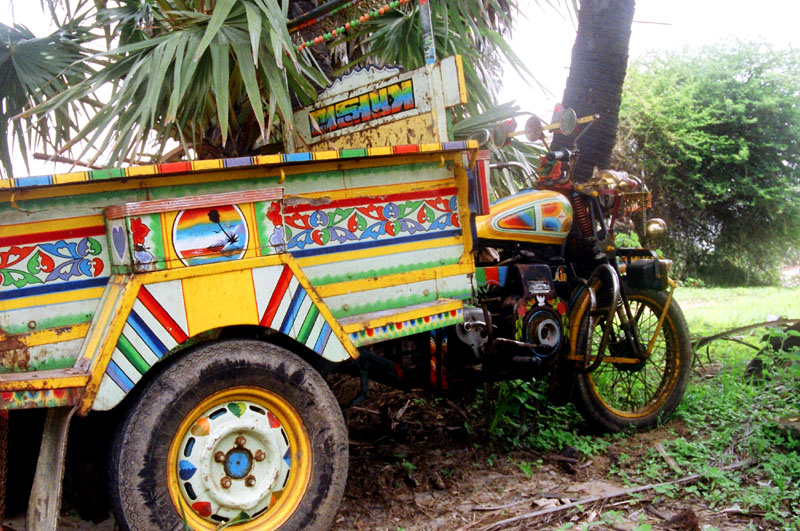
Tuk-tuks (or chhakdas as they are known in some parts of India), motorcycle bodies mated to a large wooden carrier, are mostly ubiquitous all over the country. Especially so in the more rural areas. They are seen as a cheap alternative to mainstream transportation, and small enough to maneuvre easily on the tiny, winding country roads. Almost all are characterised by intricately painted patterns in bright, often psychedelic, colours. To most Indians the garish designs come across as loud and crass. Nonetheless they seem to be a favourite with those in the 'transportation' industry, since the 'shout-out' colours are a recurring theme even on other mass transport vehicles such as buses, trucks and autorickshaws- not just in India but all over the south and south-east Asian region. And sometimes it takes an outsider to get us to appreciate something that we find repulsive, yet is an integral part of the social fabric.

During the late 1960s and early 1970s Ettore Sottsass, the Italian architect turned industrial designer, made several visits to India as part of the UNDP cultural exchange program. A professor of mine from design school, then a much younger man, travelled with him through parts of northern and central India and they spent long hours discussing the aesthetic as typefied by trucks and tuk-tuks in this part of the world. A significant portion of the discussion focussed on Sottsass' dissatisfaction with the International Style prevalent then and the Post-Bauhaus black-box designs churned out in the US and Europe. He saw something in the irreverant humour and the gross aestheitc of tuk-tuks that we Indians had obviously missed.

A decade later, in 1981, Sottsass and a few associates launched the Memphis Group. Their work, touted by many as more fashion than academia, went a long way in breaking out of the black-box mould that design had gotten into post-Bauhaus. Characterised by bright colours, rich visual texture and a complete disregard for function or propriety, Memphis soon became a fashion statement. While the group disbanded in 1988, Memphis became a watershed period in the history of modern design.

And, as some of us in India like to believe, it all started here with the tuk-tuk.

______

Nikon F75, 28-105mm
Fuji 400ISO
2005, Diu, India
Read more »

Off limits?!


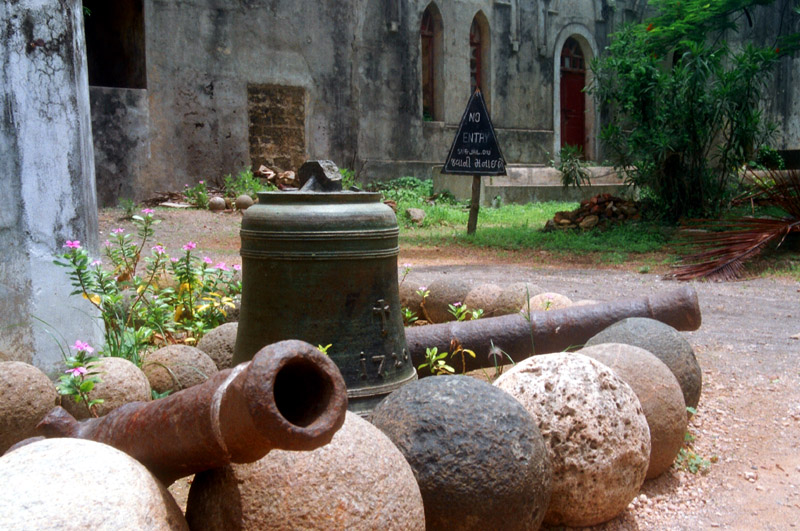
Diu, a small island on the western tip of India and an overnight journey from Ahmedabad, where I stay, is a former Portuguese colony that retains some of the old world charm even today. I spent a lovely weekend there a few days back, enjoying the sea, sun and sand. And getting pissed drunk at night. And making pictures, of course...! One of the popular tourist attractions in Diu is the fort which once housed the cellular jail- home to several prominent 'reactionaries' during India's freedom struggle.

This odd juxtaposition of elements caught my eye at the entrance to the fort. A 'NO ENTRY' sign, a couple of cannons and several assorted cannon-balls seemingly announcing 'Bugger off! You've no business being here!!' and a stalk of flowers nestling among the cannons as if to say 'Don't take us seriously, we're all about the sun and sand, really...'

______

Nikon F75, 28-105mm
Fuji 100ISO
2005, Diu Fort and Cellular Jail, Diu.
Read more »

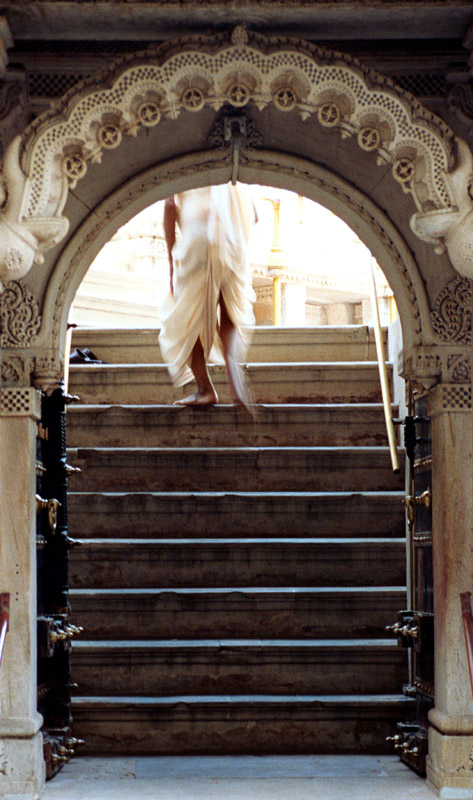
Stairway to heaven?


Just wondering; is this what a stairway to heaven would look like? Framed by an elaborately, and intricately, carved arch and solid, brass-studded, mahogany doors? An ethereal figure-in-white ascending before you as you await your turn, next?

Temples, mosques, churches- all purport to get you closer to heaven, and to God. Do they? Really? Just wondering...

______

Nikon F75, 28-105mm
Fuji 400ISO
2005, Jain temple at Khaaraa Kuwa ni Pol, Near Fernandes Bridge, Ahmedabad.
Read more »

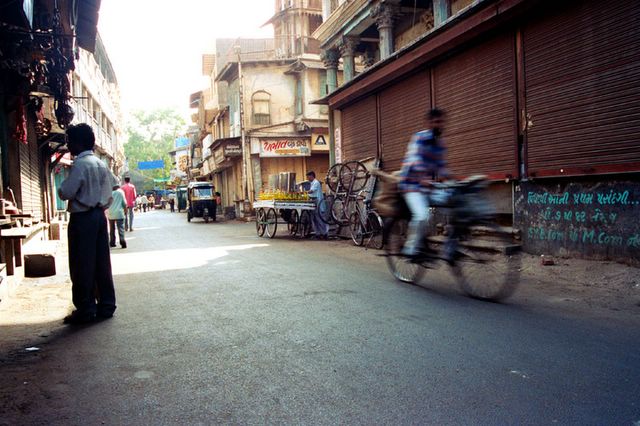
A quiet sunday afternoon in the pols


The modern city of Ahmedabad was founded, on the banks of the river Sabarmati, by Ahmed Shah Abdali in the year 1142AD or thereabouts. Over centuries the city has changed much, as most cities are wont to, now spanning a good 20 kilometers or so from one end to another; The 52 gates (or Darwaze), which at one time stood sentinels to the outermost periphery of the city's walled defences, now lie battered and buried in the very heart of a city bursting at its seams.

Given the harsh climate (often over 45 degrees celsius in the summer with only a month or so of monsoons in a year) and the lay of the land (leeward side of the mountains and all that) the city has evolved, over centuries, into a tightly woven warp and weft of intertwining, narrow streets called Pols with tightly packed houses bordering each side of the street; the architecture and street planning especially suited to battling the mostly harsh, arid climate. The newer, sattelite townships that have sprung up in recent years, of course, bear no resemblance to the Ahmedabad of old, but that is another matter entirely. The pols have always harboured vibrant, tight knit communities and even today continue to be the throbbing center of commerce and trade in the city. That apart, the way of life as typified by the pol is rapidly on the decline even as several organisations including the Ahmedabad Municipal Corporation and Alliance Francaise have been working for years to restore the pols to their former glory and have the entire walled city declared a World Heritage Site.

Sunday afternoons in the pols, though, tend to be a mostly quiet affair with most of the shops downing their shutters and most people prefering to sit out the afternoon heat in the relative comfort of their homes. This picture was taken on a typical pol sunday as I sat outside a closed shop smoking a cigarette, looking out at the world and it struck me that here in the pols, despite the outward degradation, not much has changed since the days of Ahmed Shah...

______

Nikon F75, 28-105mm
Fuji 400ISO
2005, Near Fernandes Bridge, Off Gandhi Road, Ahmedabad.
Read more »

Idle tears...


I met this little girl on one of my usual jaunts in the heart of old Ahmedabad. She sat there, comfortably ensconed in her grandfather's lap yet, inexplicably, and inconsolably, crying.

I tried the usual gamut of 'kiddy chatter' to get her attention and, maybe, make her give up the bawling. Nothing worked. Until I took my camera and started fiddling with the controls, that is!

This is a picture of her, tears still wet on her cheeks, but curiosity most certainly aroused. I'd like to think that after I walked away she forgot about crying for a bit.

______

Nikon F75, 28-105mm
Fuji 400ISO
2005, Near Fernandes Bridge, Ahmedabad.
Read more »